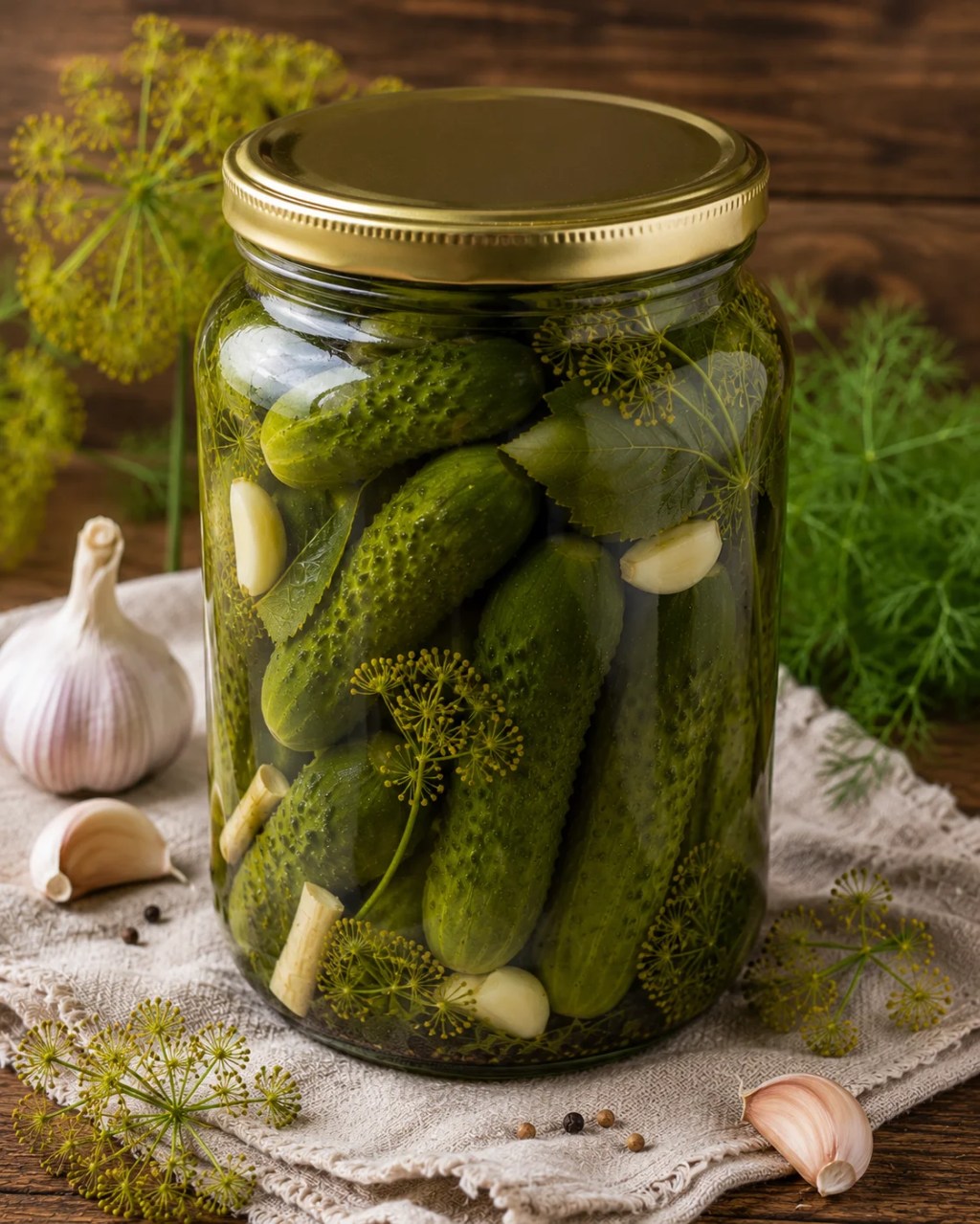
Crunchy, Fresh, and Ready in Just a Few Days
Nothing reminds me of summer quite like a jar of homemade Polish Half-Sour Pickles.
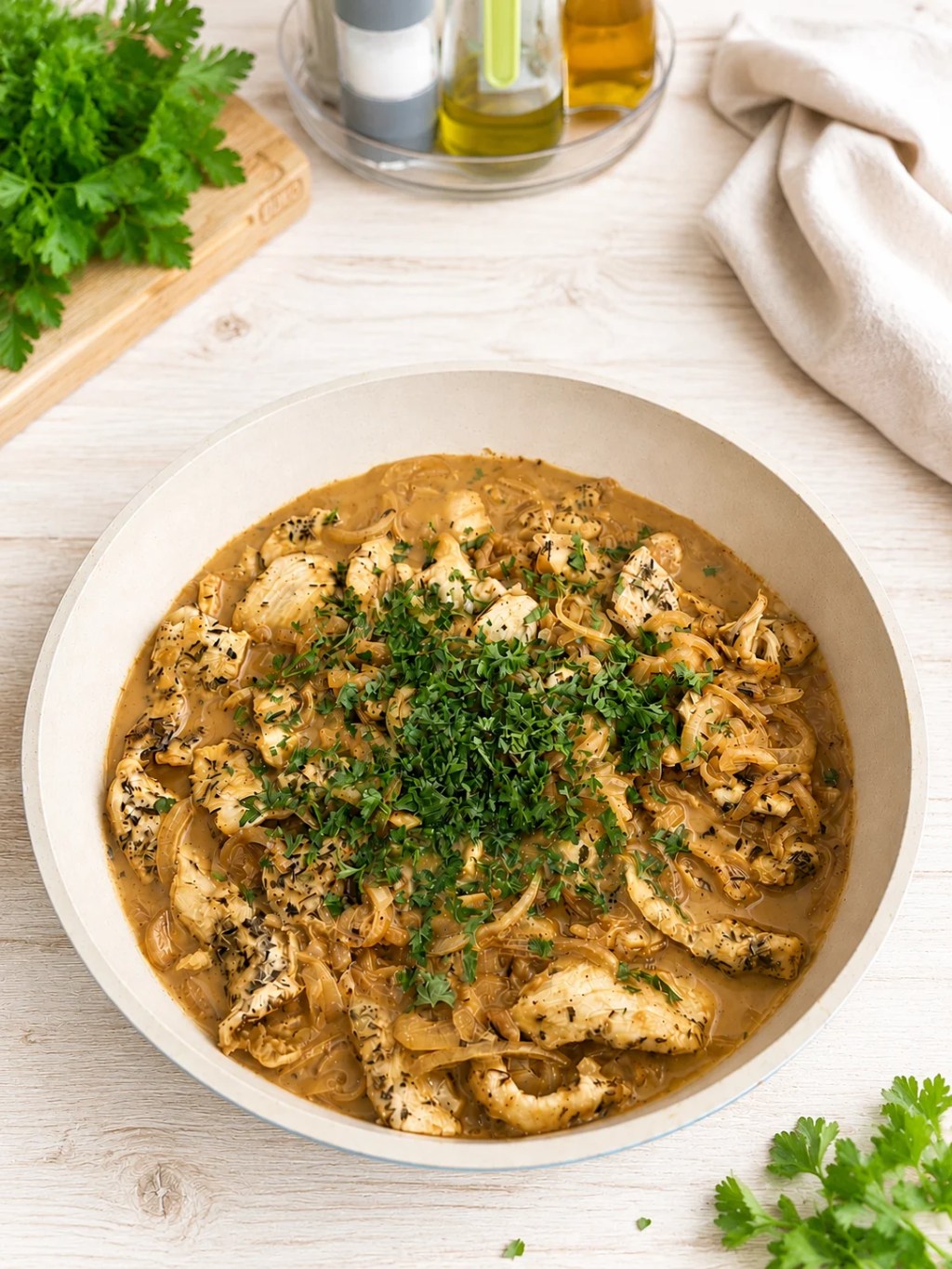
They’re wonderfully crunchy, lightly tangy, and packed with the fresh flavors of dill and garlic. Unlike fully fermented pickles, these are ready after just a few days, making them the perfect side dish for family dinners, grilled meats, sandwiches, or my Creamy Chicken Strips in Paprika Sauce.
The best part? You don’t need to measure every ingredient. The only thing that really matters is the salt-to-water ratio. Everything else can be adjusted to suit your own taste.
Ingredients
- Pickling cucumbers (as many as fit into your jar or fermentation crock)
- Water
- 1 tbsp non-iodized pickling salt for every 1 liter of water
- Fresh dill with stems and flower heads
- Garlic cloves
- Horseradish root or horseradish leaves (use whichever is available)
Customize the Flavor
One of the best things about homemade Polish Half-Sour Pickles is that you can adjust the flavor to your own taste. There are no strict rules—feel free to experiment until you find your favorite combination.
🌿 Dill
Fresh dill gives the pickles their classic Polish flavor and a fresh, herbal aroma.
If you enjoy a stronger dill flavor, simply add more.
🧄 Garlic
Garlic adds a rich, savory flavor that becomes milder as the cucumbers ferment.
If you love garlic, don’t hesitate to add a few extra cloves.
🌱 Horseradish Root or Leaves
Horseradish helps keep the cucumbers firm and crisp while adding a mild peppery flavor.
Both the root and the leaves work well, so simply use whichever is available.
If extra crunchy pickles are your favorite, add a little more horseradish.
🧂 Salt
Salt is the only ingredient that should be measured carefully.
Always use 1 tablespoon of non-iodized pickling salt for every 1 liter of water. This creates the right environment for natural fermentation.
Instructions
Prepare the Cucumbers
Wash the cucumbers thoroughly.
Fill the Jar
Place some dill, garlic, and horseradish in the bottom of a clean jar or fermentation crock.
Pack the cucumbers tightly inside, adding more dill, garlic, and horseradish between the layers if you like.
Prepare the Brine
Dissolve 1 tablespoon of non-iodized pickling salt in every 1 liter of water.
Pour the brine over the cucumbers until they are completely covered.
If needed, place a small weight or another clean object on top to keep the cucumbers submerged beneath the brine.
Ferment
Cover the jar loosely and leave it at room temperature for 2–4 days, depending on how tangy you like your pickles.
Taste one each day.
When they reach the flavor you enjoy, move the jar to the refrigerator.
Serving Suggestions
These crunchy pickles are delicious served with grilled meats, sandwiches, potato dishes, or my Creamy Chicken Strips in Paprika Sauce.
Storage
Store the pickles in the refrigerator for up to 2 weeks.
Recipe Tips
- Use fresh, firm pickling cucumbers for the best crunch.
- Always keep the cucumbers completely covered with brine.
- The warmer the room, the faster the pickles will ferment.
- Taste one every day so you can stop the fermentation when they’re just right for you.
- I never measure the dill, garlic, or horseradish. Some days I add more garlic, other times I reach for extra horseradish. That’s the beauty of homemade pickles—you can make them exactly the way your family loves them.
Frequently Asked Questions
What are Polish Half-Sour Pickles?
Polish Half-Sour Pickles are naturally fermented cucumbers that are ready after just a few days. They stay wonderfully crisp and have a fresh, mildly tangy flavor.
Can I use table salt?
It’s best to use non-iodized pickling salt or sea salt for reliable fermentation.
How do I know when they’re ready?
Taste one every day. Once they’re crunchy with a light sour flavor, they’re ready to enjoy.
Why do the cucumbers need to stay under the brine?
Keeping the cucumbers submerged helps them ferment properly and prevents spoilage.
Can I use a fermentation crock instead of jars?
Absolutely! This recipe works just as well in a traditional fermentation crock.

Leave a comment