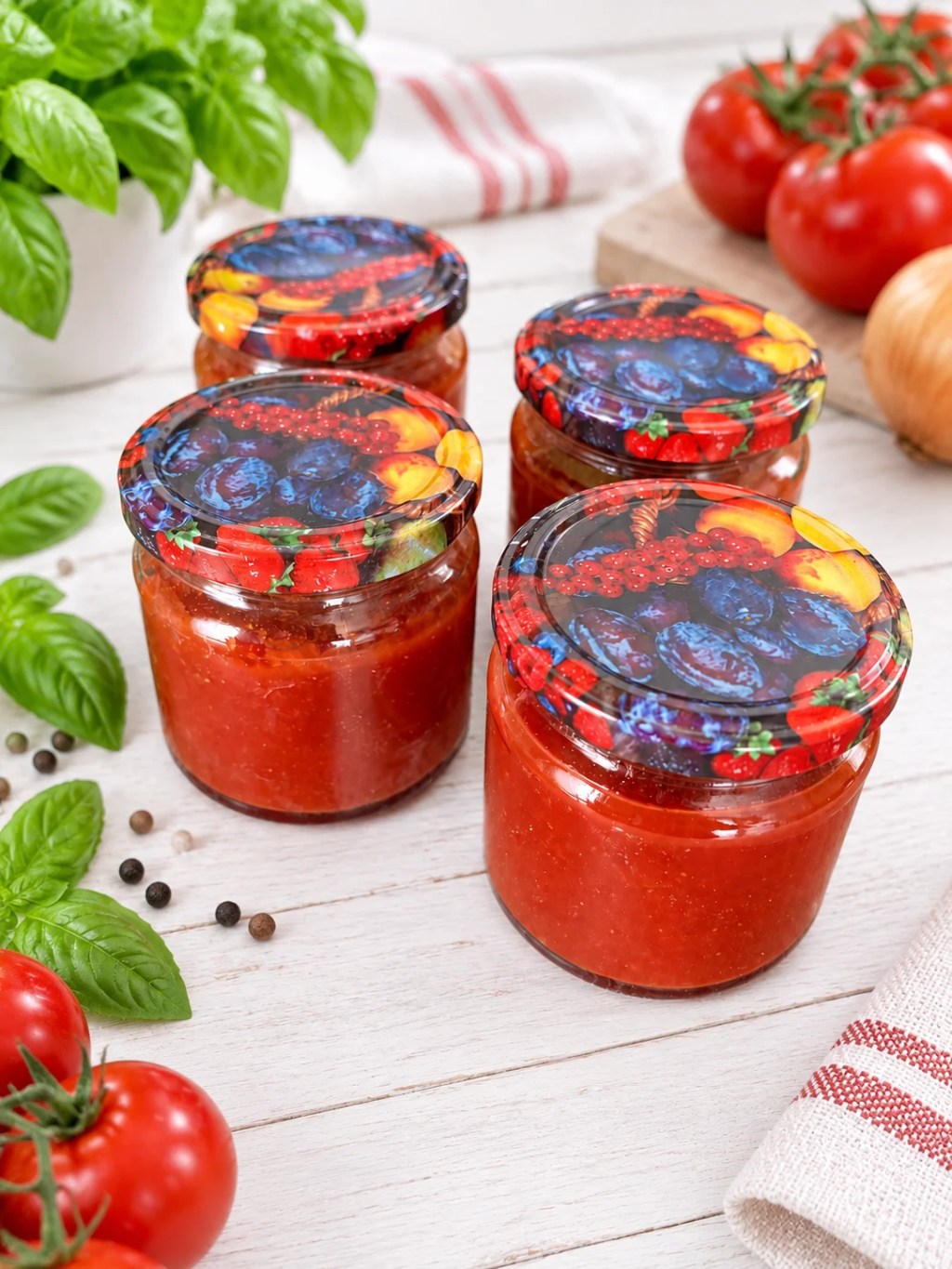
A rich, homemade tomato ketchup made with fresh tomatoes, onion and aromatic spices. It is smooth, thick and full of homemade flavour — perfect with burgers, fries, sandwiches and so much more.
Ingredients
Tomato Ketchup
- 4 kg ripe tomatoes
- 550 g onions
- 460 ml 5% apple cider vinegar
- 200 g sugar
- 1½ tablespoons salt
- ¼ teaspoon cayenne pepper
- 1½ teaspoons cloves
- ½ teaspoon allspice
- 3¾ teaspoons celery seeds
- 1 cinnamon stick
Instructions
1. Prepare the tomatoes
Wash the tomatoes thoroughly and cut them into smaller pieces.
There is no need to peel or blanch the tomatoes at this stage. The skins and seeds will be removed later by passing the cooked mixture through a fine sieve.
2. Prepare the onions
Peel the onions and cut them into quarters or large pieces.
3. Cook the tomatoes and onions
Place the tomatoes and onions in a large pot.
Add the cayenne pepper.
Bring the mixture to a boil, then cook uncovered for about 20 minutes, stirring occasionally, until the tomatoes and onions become soft.
4. Blend the mixture
Using an immersion blender, blend the cooked tomatoes and onions until the mixture is as smooth as possible.
5. Prepare the spiced vinegar
In a separate saucepan, add the 460 ml apple cider vinegar together with the cloves, allspice, celery seeds and cinnamon stick.
Heat until the vinegar comes to a boil.
The spices will infuse the vinegar and give the ketchup its characteristic flavour.
6. Combine the vinegar and tomato mixture
Add the hot spiced vinegar to the tomato mixture.
Cook everything together for another 30 minutes, stirring occasionally.
7. Strain the ketchup
Remove the cinnamon stick and whole spices.
Pass the tomato mixture through a fine sieve to remove the tomato skins and seeds.
Take your time with this step — it is what gives the ketchup its smooth, silky texture.
Return the strained tomato mixture to the pot.
8. Add the sugar and salt
Add 200 g sugar and 1½ tablespoons salt.
Stir well and bring the mixture to a gentle simmer.
9. Reduce the ketchup
Cook the ketchup uncovered over low heat, stirring regularly, until it becomes thick and reaches your desired consistency.
This is the part that takes the longest, and the final amount will depend on how much the ketchup is reduced.
The longer you reduce it, the thicker it will become.
Be careful when stirring because thick tomato mixtures can bubble and splatter.
10. Prepare the jars
Once the ketchup has reached your desired consistency, bring it back to a gentle boil.
Prepare clean, hot jars according to your chosen canning procedure.
11. Fill the jars
Ladle the hot ketchup into the prepared jars, leaving approximately 3 mm headspace.
Wipe the rims carefully so they are completely clean.
Close the jars with the prepared lids.
12. Canning
For shelf-stable storage, follow the tested processing instructions from the National Center for Home Food Preservation (NCHFP) Tomato Ketchup recipe.
Because the quantities in this recipe have been adapted to the amount of tomatoes used in my kitchen, the recipe above should not be considered an independently tested canning formula. For safe home canning, use the current NCHFP processing recommendations for Tomato Ketchup.
Yield
This batch made:
11 × 200 ml jars — approximately 2.2 litres of ketchup.
The final amount may vary depending on the type of tomatoes and how much the ketchup is reduced.
Storage
If you are canning the ketchup for long-term storage, use a tested canning procedure and follow the recommended processing time for your jar size and altitude.
After processing, allow the jars to cool undisturbed and check the seals before storing.
Store properly processed jars in a cool, dark place.
Tips
- Choose ripe, flavourful tomatoes for the best ketchup.
- There is no need to peel or blanch the tomatoes before cooking because the mixture will be strained later.
- An immersion blender makes the first stage much easier and quicker.
- Do not rush the final reduction. This is what gives homemade ketchup its thick consistency.
- Stir the ketchup regularly while reducing it to prevent it from sticking to the bottom of the pot.
- The ketchup will continue to thicken slightly as it cools.
- The final yield depends on the amount of liquid in the tomatoes and how far you reduce the ketchup.
- For canning, always follow a tested recipe and processing method rather than relying only on the size of the batch.
Frequently Asked Questions
Can I use different types of tomatoes?
Yes. You can use different ripe tomatoes, although tomatoes with more flesh and less water will generally give you a thicker ketchup and require less reduction.
Do I have to peel the tomatoes?
No. For this recipe, the tomatoes are cooked with their skins and seeds and then passed through a fine sieve.
Can I make the ketchup without an immersion blender?
Yes. You can use another suitable blender, but an immersion blender is particularly convenient because you can blend the mixture directly in the pot.
Why does my ketchup seem too thin?
It probably needs more time to reduce. Continue cooking it uncovered over low heat, stirring regularly, until it reaches the consistency you like.
Will the ketchup thicken after cooling?
Yes. Homemade ketchup usually becomes a little thicker as it cools.
Can I make the ketchup less spicy?
Yes. The cayenne pepper can be reduced or omitted if you prefer a milder ketchup. Keep in mind that when adapting a tested canning recipe, ingredient changes can affect the safety of the finished product, so for shelf-stable canning it is best to follow the tested formula.
How long can homemade ketchup be stored?
For shelf-stable storage, use a tested canning procedure and follow the recommended processing instructions. Once a jar has been opened, refrigerate it.
Recipe Source
Recipe source: This recipe was adapted from the National Center for Home Food Preservation (NCHFP) Tomato Ketchup recipe.
The recipe was adapted to the amount of tomatoes available and prepared using an immersion blender. The quantities and preparation above reflect the batch I made at home.
The NCHFP recipe is the basis for the ketchup recipe and its tested canning method. For safe home canning, refer to the current NCHFP instructions and processing times.



Leave a Reply