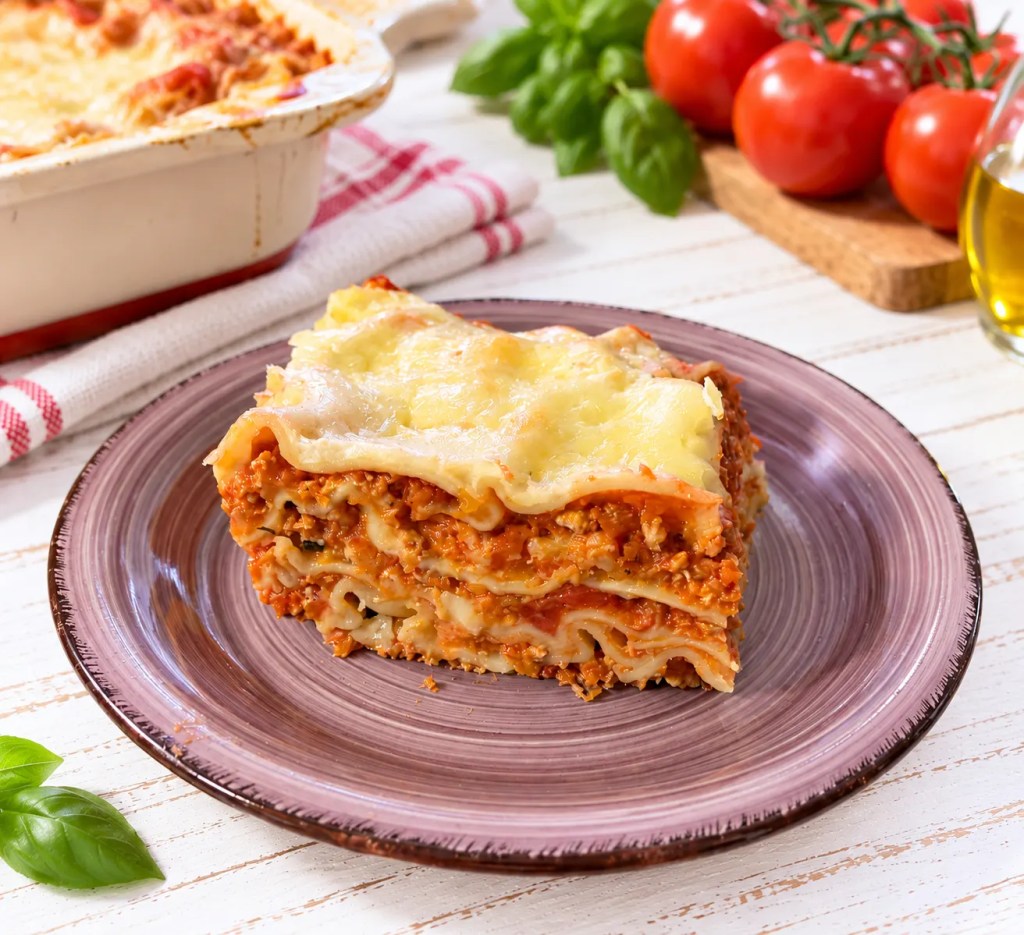
Some meals are just made for sharing around the family table, and homemade lasagna is definitely one of them. This version layers a rich chicken ragu with creamy béchamel sauce, tender pasta sheets and plenty of melted cheese.
The meat sauce is made with ground poultry, carrots, onion, celery, garlic and tomatoes, slowly simmered until full of flavour. A smooth béchamel adds creaminess, while mozzarella and Gouda melt together to create a delicious golden topping.
It takes a little time to prepare, but most of the work is simply making the sauces and assembling the layers. Once the lasagna is in the oven, you can relax while your kitchen fills with that wonderful homemade-dinner smell.
Serve it for Sunday lunch, a family dinner or whenever you’re craving a comforting pasta bake.
Ingredients
For the chicken ragu
- 800 g ground poultry (chicken or turkey)
- 180 g onion, weighed after peeling
- 180 g carrots, weighed after peeling
- 180 g celery stalks, washed and trimmed
- 2–3 garlic cloves
- 700 ml tomato passata
- 400 g canned chopped tomatoes
- 50 g tomato paste
- 15 g olive oil
- 1 teaspoon dried oregano
- 1 teaspoon dried basil
- 1 teaspoon sweet paprika
- ½ teaspoon dried thyme
- 1–1½ teaspoons salt, to taste
- Black pepper, to taste
- 1 teaspoon sugar or sweetener, optional
- 100–200 ml water, if needed
For the creamy béchamel sauce
- 50 g butter
- 50 g wheat flour (Type 405)
- 700 ml whole milk (3.5% fat)
- Salt and black pepper, to taste
- A pinch of ground nutmeg
- 1–2 teaspoons lemon juice
For assembling the lasagna
- Dried lasagna sheets that do not require pre-cooking, as needed
- 200 g grated mozzarella
- 200 g grated Gouda
The number of lasagna sheets will depend on the size and depth of your baking dish.
Instructions
1. Prepare the vegetables
Peel the onion, carrots and garlic. Wash the celery stalks and trim the ends.
Finely chop all the vegetables. You can do this by hand or use a food processor, but avoid blending them into a smooth paste. Small pieces will give the sauce a lovely texture.
2. Make the chicken ragu
Heat the olive oil in a large pot over medium heat. Add the onion, carrots and celery. Cook for about 7–8 minutes, stirring occasionally, until the vegetables begin to soften.
Add the garlic and cook for another minute.
Add the ground poultry and break it up with a wooden spoon or spatula. Cook for about 8–10 minutes, until the meat is no longer pink and is cooked through. If it starts sticking to the bottom of the pot, add a small splash of water.
Stir in the tomato paste and cook for about one minute.
Pour in the tomato passata and canned chopped tomatoes. Add the oregano, basil, sweet paprika, thyme, salt and black pepper. Mix everything well.
Reduce the heat and simmer gently for 25–30 minutes, partially covered, stirring occasionally.
Taste the sauce. If the tomatoes are particularly acidic, add a teaspoon of sugar or sweetener if desired. If the sauce becomes too thick, add a little water.
The finished ragu should be thick and rich, but still moist enough to help the dried pasta sheets cook in the oven.
3. Make the creamy béchamel sauce
Melt the butter in a saucepan over low to medium heat.
Add the flour and whisk continuously for about one minute. Do not let the mixture brown too much.
Gradually pour in the milk, a little at a time, whisking constantly to prevent lumps from forming.
Cook over low to medium-low heat, stirring frequently, until the sauce becomes smooth and lightly thickened. This usually takes around 5–8 minutes, but the exact time depends on the saucepan and heat.
The béchamel should be creamy and easy to pour, not stiff or overly thick. It will thicken a little more as it cools, so remove it from the heat as soon as it reaches a smooth, pourable consistency.
Season with salt, black pepper and a pinch of nutmeg. Add one teaspoon of lemon juice, stir and taste. Add the second teaspoon if you prefer a slightly brighter flavour.
If the sauce becomes too thick, whisk in a little extra milk until it is easy to spread between the lasagna sheets.
4. Prepare the cheese
Combine the grated mozzarella and Gouda in a bowl.
Set aside approximately one-third of the cheese mixture for the top of the lasagna. The remaining cheese will be used between the layers.
5. Assemble the lasagna
Preheat the oven to 180°C with the fan setting.
Spread a thin layer of chicken ragu over the bottom of a large baking dish, followed by a little béchamel sauce.
Arrange a layer of dried lasagna sheets on top. Add more chicken ragu, béchamel and a small amount of the cheese mixture.
Repeat the layers until you have used the ingredients, finishing with a layer of pasta covered generously with béchamel. Sprinkle the reserved cheese mixture evenly over the top.
Make sure all the pasta sheets, especially those around the edges, are covered with sauce. Dry pasta needs enough moisture to soften properly during baking.
If your ragu has become very thick, stir in a little water before assembling the lasagna.
6. Bake the lasagna
Place the baking dish on the middle rack of the preheated oven.
Bake at 180°C with the fan setting for approximately 35–45 minutes, until the cheese is golden and bubbling.
If the cheese starts browning too quickly, loosely cover the dish with aluminium foil for the remaining baking time.
Before removing the lasagna from the oven, insert a knife into the centre to check whether the pasta sheets are tender. If they still feel firm, bake for a few more minutes and check again.
Once baked, leave the lasagna to rest for 10–15 minutes before slicing. This helps the layers settle and makes serving much easier.
7. Serve and enjoy
Cut the lasagna into portions and serve while warm, when the béchamel is creamy and the mozzarella and Gouda are deliciously melted.
It is lovely on its own or served with a simple green salad or fresh vegetables.
Recipe Tips
- Keep the meat sauce moist. Dried lasagna sheets need moisture to cook properly. If the ragu becomes too thick, add a little water.
- Keep the béchamel pourable. The combination of 50 g butter, 50 g flour and 700 ml milk makes a creamy sauce that is easier to spread between the layers.
- Add the milk gradually. Whisk continuously while adding the milk to help prevent lumps.
- Avoid overcooking the béchamel. Remove it from the heat as soon as it is smooth and lightly thickened. It will become thicker as it cools.
- Cover the pasta completely. Pay special attention to the edges and corners of the dish so the pasta does not remain hard.
- Use a cheese combination. Mozzarella gives you that stretchy, melted texture, while Gouda adds a fuller flavour.
- Watch the cheese topping. If it browns before the pasta is tender, loosely cover the dish with aluminium foil.
- Let it rest before slicing. Waiting 10–15 minutes helps the lasagna hold its shape when served.
- Using homemade pasta? Fresh pasta sheets may cook faster than dried ones. Start checking the lasagna after about 25–30 minutes, as the exact time depends on the thickness of the pasta and the amount of sauce.
What to Serve with Chicken Ragu Lasagna
This lasagna is a filling meal on its own, but a few simple sides work beautifully with it:
- A fresh green salad with a light dressing
- Sliced cucumber and tomatoes
- Steamed or roasted vegetables
- A simple lettuce salad with lemon dressing
Choose something fresh and light to balance the creamy sauce and melted cheese.
Storage
Allow leftover lasagna to cool, then transfer it to an airtight container and refrigerate within two hours of cooking.
Store in the refrigerator for up to 3–4 days. Reheat individual portions in the microwave or oven until steaming hot throughout.
If reheating in the oven, cover the portion with foil to help prevent it from drying out. Add a small splash of water if needed.
Can You Freeze Chicken Ragu Lasagna?
Yes. Lasagna freezes well, making it a convenient option for meal preparation.
Allow it to cool completely, then portion it into freezer-safe containers. Freeze for up to 3 months for the best quality.
Thaw overnight in the refrigerator before reheating, and make sure it is steaming hot throughout before serving. You can also freeze individual portions for quick lunches or dinners.
Frequently Asked Questions
Can I use ground chicken or ground turkey?
Yes. Both work well in this recipe. Choose whichever ground poultry you prefer. Cooking times may vary slightly depending on the type and fat content of the meat.
Do I need to boil the lasagna sheets first?
Not if you are using dried lasagna sheets labelled as suitable for baking without pre-cooking. Always check the package instructions. Other types may require pre-cooking.
Why is my béchamel sauce too thick?
Béchamel thickens as it cooks and becomes thicker still as it cools. Avoid cooking it longer than necessary. For this recipe, use 50 g butter, 50 g flour and 700 ml milk. If the sauce is too thick to spread easily, whisk in a little extra milk.
Why is my lasagna still hard in the middle?
The pasta may not have had enough moisture, or the lasagna may need more time in the oven. Make sure the sheets are covered with sauce and check their tenderness before removing the dish. If necessary, add a little extra water around the edges, cover loosely with foil and continue baking.
Can I prepare the lasagna ahead of time?
Yes. You can prepare the ragu and béchamel in advance and refrigerate them separately. You can also assemble the lasagna, cover it and refrigerate it before baking. If baking straight from the refrigerator, allow for additional cooking time and check that the centre is fully heated and the pasta is tender.
Can I use a different cheese instead of Gouda?
Yes. Edam or another good melting cheese can work. Keep the mozzarella if you want that stretchy cheese texture.
Why should I let the lasagna rest before cutting it?
Resting allows the sauce and layers to settle. If you cut it immediately after baking, the portions may fall apart more easily.
Can I make the béchamel without nutmeg?
Of course. Nutmeg adds a traditional warm flavour to béchamel, but the sauce will still be delicious without it.
How do I know when the lasagna is ready?
The cheese should be melted and golden, the sauce should be bubbling around the edges, and a knife inserted into the centre should pass through the pasta easily.


Leave a Reply